

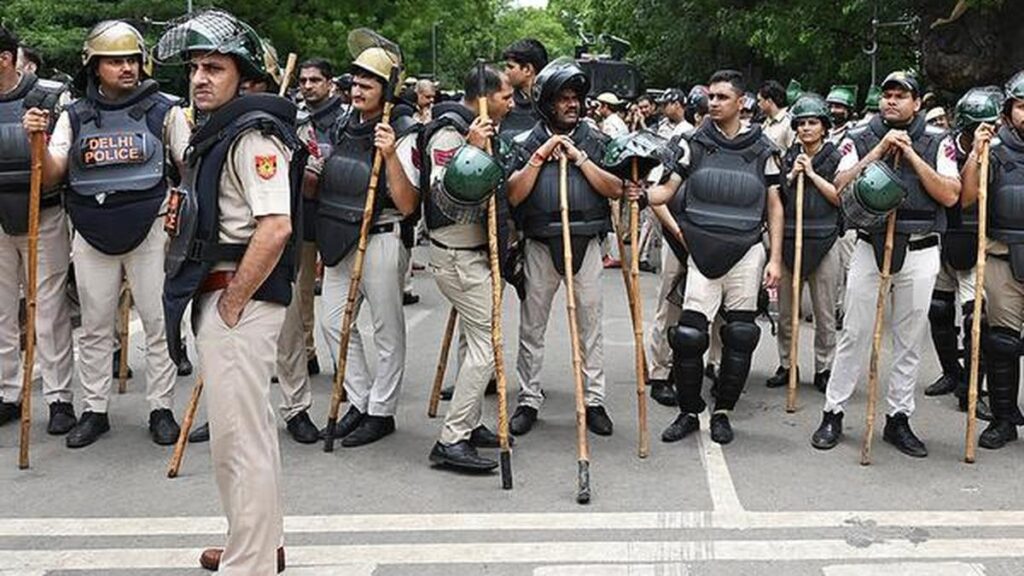
Delhi Police has significantly reinforced security arrangements around Jantar Mantar and other sensitive areas of Lutyens’ Delhi ahead of the weekend, erecting additional barricades interlinked with heavy-duty chains and further reinforced through welding, as separate protests by the Cockroach Janta Party (CJP) and the Youth Congress are expected to draw large crowds to the national capital’s central district.
The Scale of the Security Measures
According to police officials, barricades have already been installed at strategic locations across the area, with surveillance intensified through an expanded network of CCTV cameras and other monitoring systems. Multi-layered security arrangements have been deployed across Lutyens’ Delhi, with particular reinforcement around Jantar Mantar, the site of the ongoing CJP protest, given the scale of crowds the demonstration has continued to attract.
Police teams have also stepped up vehicle checks and frisking at strategic points throughout the area, while security at Metro stations and other public places in the vicinity has been further enhanced. Additional security personnel have also been positioned around important government buildings, Parliament, and other vital installations within the Lutyens’ Delhi zone as a precautionary measure.
Traffic Restrictions Expected
Because of the expected movement of people protesting traffic restrictions will probably be put in place around areas including Connaught Place, Jantar Mantar, Rafi Marg and nearby roads over the weekend. Delhi Traffic Police is expected to control the movement of cars in these areas with changes to traffic to be made to help reduce problems for normal people driving through the affected parts of the city.
Metro Station Closures
As part of the security response the Delhi Metro Rail Corporation (DMRC) has separately announced the closing of 18 Metro stations, including big transfer points and central places such as Rajiv Chowk, Patel Chowk, Supreme Court and Khan Market because of the ongoing protests. These closures show the way the metro authorities act when working with Delhi Police advice during times of more people gathering and possible problems in central Delhi.
Background: The CJP Protest and Its Demands
The heightened security comes against the backdrop of the Cockroach Janta Party’s continuing protest against the Centre over the alleged NEET-UG paper leak controversy, alongside the movement’s core demand for the resignation of Union Education Minister Dharmendra Pradhan. The Gen Z-led protest has continued at Jantar Mantar for well over a month, drawing sustained national attention, including through climate activist Sonam Wangchuk’s now-concluded 26-day hunger strike undertaken in solidarity with the movement.
Even after Wangchuk ended his fast following government assurances, including the announcement of fast-track courts for paper leak cases, the CJP has maintained that its broader agitation at Jantar Mantar will continue until Pradhan’s resignation, a demand the government has shown no clear indication of meeting.
The Youth Congress Protest
Alongside the ongoing CJP demonstration, Delhi Police is also preparing for a separate protest planned by the Youth Congress over the same weekend. While specific details of the Youth Congress protest’s precise demands and planned route were not immediately available, its timing alongside the continuing CJP agitation has contributed to the scale of the security response being mounted by Delhi Police across the Lutyens’ Delhi area this weekend.
A Familiar Pattern of Fortification
The welding of barricades with heavy-duty chains reflects a security approach Delhi Police has employed on previous occasions when anticipating large or potentially disruptive protests in the national capital. Similar multi-layered fortification measures, including reinforced barricades, barbed wire, and, in some past instances involving farmer protests at Delhi’s borders, even cemented nail installations and concrete barriers, have periodically been deployed by the force during periods of heightened protest activity, reflecting a broader institutional playbook for managing large-scale public demonstrations within and around the capital.
Why This Matters
The amount of security being prepared for this weekends protests shows how strong the disagreement between the government and the CJP-led student movement is, weeks after the protest started. For people living and working in Delhi the mix of closed metro stations, traffic changes and more checks is likely to cause real problems for moving around some of the citys busiest business and government areas over the weekend.
What Will Happen Next
With security measures now in place and traffic restrictions expected to begin as people move around over the weekend attention will be on how the CJP and Youth Congress protests go and whether the stronger barriers help stop the kind of problems that happened during the movements Parliament Chalo” march, which led to police action and later political issues. Because the CJP is still asking for the Education Minister Pradhan to step down more protests and security actions in the capital are likely, in the days ahead.