

Tokyo/Washington:
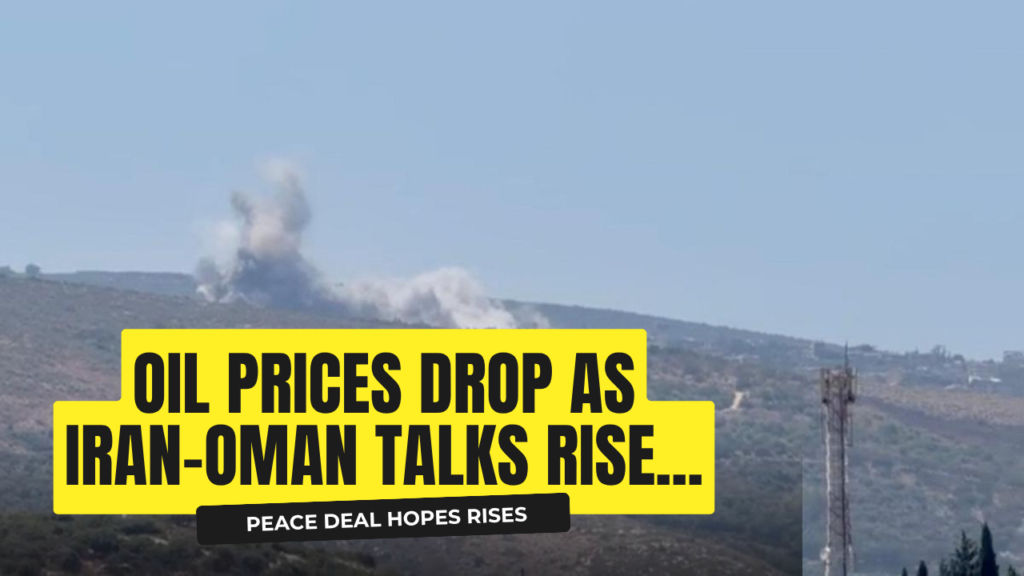
Oil prices trended lower on Thursday as investors weighed whether progress in talks between Iran and Oman could pave the way for a U.S.-Iran peace deal to end the five-month war and reopen the Strait of Hormuz. Brent crude futures fell to around $79 a barrel, while U.S. West Texas Intermediate slipped to roughly $74.70, with prices returning to levels last seen when the U.S. and Iran signed an interim peace agreement in June.
A Major Concession on the Table
A senior Iranian source and two regional officials told Reuters that a proposed deal between Iran and Oman would give Tehran control over ships entering the Gulf through the Strait of Hormuz — one of the most significant concessions offered to Iran so far in the conflict. There has been no immediate comment from the United States on the proposal. While President Trump has said a deal reopening the strait is imminent, U.S. officials have previously said they would never agree to Iran controlling access to the world’s most important energy trade route, underscoring the gap between public statements and what is reportedly being negotiated.
Iran Announces Progress, Sets No Timeline
Iran said on Wednesday it was near finalising an arrangement with Oman over management of the strait, with a member of Iran’s negotiating team indicating Tehran was discussing “temporary arrangements” lasting one to three months during which Iran would remain dominant over the waterway. Qatar’s Foreign Ministry spokesperson said regional countries were “working together” and coordinating closely with Oman to facilitate talks between Washington and Tehran, noting that draft language on a possible agreement was being exchanged between the parties, even as no direct U.S.-Iran talks were currently scheduled.
Iran’s Warning to Gulf States
According to Reuters, Iran has warned Gulf states that any new U.S. attack on its territory would trigger retaliation against critical regional energy infrastructure, as Tehran seeks to raise the cost of further military action by implicating Washington’s regional allies.
Houthi Attack on Saudi Tanker
Separately, Yemen’s Iran-aligned Houthi movement said Wednesday it had launched a missile attack on a Saudi oil tanker off Yemen’s coast, adding another flashpoint to an already volatile regional security picture even as diplomatic efforts continue.
Why the Strait of Hormuz Matters
The Strait of Hormuz, effectively closed by Iran since fighting began in late February, normally carries about 20 million barrels of oil daily — roughly one-fifth of global oil production — from major producers including Saudi Arabia, Iraq, and Kuwait, according to the U.S. Energy Information Administration, which calls it a “critical oil chokepoint” with very few alternative routes.
Note: This is a live, rapidly evolving story. Details on the Iran-Oman proposal and any U.S. response may change quickly; figures and developments should be verified against the latest wire reports before publishing.