

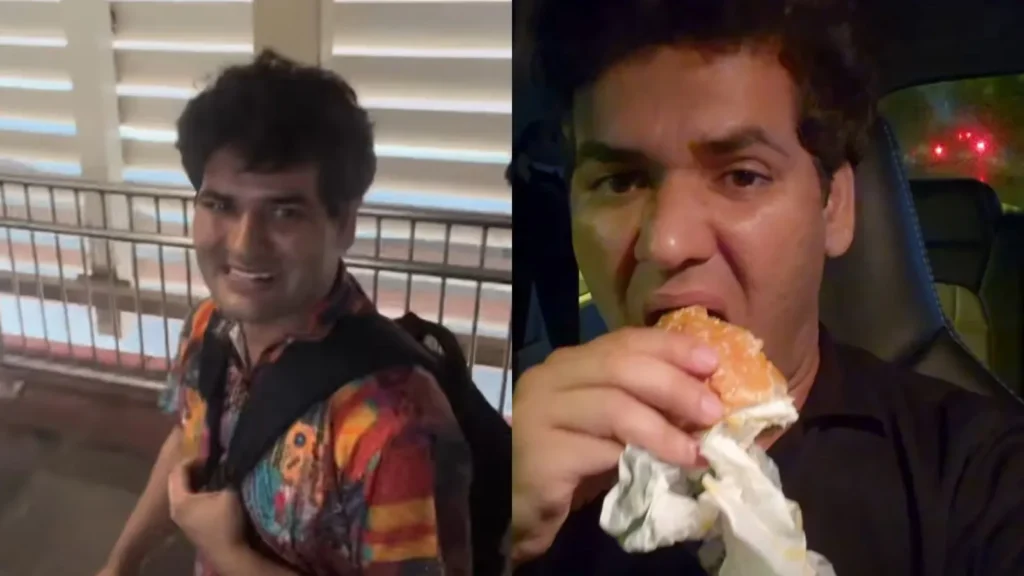
The Cockroach Janta Party (CJP) has removed Vijeta Dahiya from his position as party spokesperson after a video of him eating a burger went viral on social media, with the party condemning his conduct as insensitive given that the clip surfaced while protesters and party workers were facing police action during the movement’s “Parliament Chalo” demonstration.
What the Video Showed
The controversy began after a clip emerged online showing Dahiya eating a burger, which quickly drew criticism given its timing. The video surfaced precisely as CJP workers and supporters were dealing with police action during Monday’s “Parliament Chalo” march, a demonstration the party has said saw several peaceful protesters subjected to police action, including reported lathi-charge and tear gas, as demonstrators attempted to march toward Parliament.
In the viral clip itself, Dahiya pushed back against the criticism directed at him, questioning why people were taking issue with him eating a burger, stating simply that he had done so because he was hungry and wanted to eat. He also questioned why he was being held accountable for the choice, seemingly unaware of, or indifferent to, how the timing of the video would be perceived given the events unfolding elsewhere in the protest at the same time.
The Party’s Response
The Cockroach Janta Party moved swiftly to distance itself from Dahiya’s conduct, issuing a statement strongly condemning what it described as his deeply insensitive actions. The party noted that the videos had surfaced precisely while peaceful protesters and CJP’s own team were said to be facing what it characterised as brutal police violence, framing the contrast between Dahiya’s conduct and the situation faced by other protesters as central to its decision.
CJP confirmed that Dahiya had been removed from his position as spokesperson with immediate effect and relieved of all official responsibilities within the organisation. The party further claimed that Dahiya had not actually participated in the protest himself, adding a further dimension to its criticism of his conduct. In its statement, the party said such behaviour was unacceptable and stood in direct contradiction to the core principles and values underpinning the broader movement, adding that the decision to remove him had been taken specifically to maintain internal discipline and to protect the message the organisation seeks to convey through its protests.
Background: What the CJP Is and What It Stands For
The Cockroach Janta Party is a satirical Indian political movement founded on May 16, 2026, by Abhijeet Dipke, a political communications strategist who previously worked with the Aam Aadmi Party. The movement emerged directly in response to remarks made by the Chief Justice of India, Surya Kant, in which he had compared unemployed youth to “cockroaches” and “parasites of society,” comments many considered particularly hurtful given they came from a figure meant to safeguard constitutional freedoms.
The party’s name serves as a deliberate parody of the ruling Bharatiya Janata Party, and its slogan, “Voice of the Lazy and Unemployed,” reflects its satirical framing of youth unemployment and related grievances. Despite not being formally registered as a political party with the Election Commission of India, the movement gained remarkable traction within days of its founding, garnering more than 350,000 sign-ups and over 20 million followers on Instagram. Beyond its online presence, CJP volunteers have participated in offline demonstrations and clean-up drives, at times dressed in cockroach costumes as part of the movement’s distinctive satirical branding.
The Broader Protest Context
Dahiya’s removal comes amid a period of heightened tension surrounding the CJP’s activities. The party’s “Parliament Chalo” march on Monday, July 20, drew a massive turnout of students and young people attempting to march toward Parliament, calling primarily for the resignation of Union Education Minister Dharmendra Pradhan over alleged irregularities in the NEET-UG examination, as well as broader accountability for what protesters allege was a paper leak affecting millions of students. The march has since drawn continued attention, partly due to climate activist Sonam Wangchuk’s prolonged hunger strike in solidarity with the movement, and partly due to the political fallout from the police response, which saw senior Congress leaders including Rahul Gandhi and Priyanka Gandhi Vadra stage a sit-in near the Prime Minister’s residence in protest.
Why This Controversy Matters
For a movement that has built much of its public identity and credibility around solidarity with the sacrifices being made by its supporters, including Wangchuk’s extended and increasingly serious hunger strike, an incident perceived as trivialising or being indifferent to the hardships faced by fellow protesters risked undermining the broader narrative the party has sought to project. The swift and public nature of Dahiya’s removal appears to reflect the CJP leadership’s recognition of this reputational risk, and its desire to demonstrate accountability and internal discipline at a particularly sensitive moment for the movement.
What Comes Next
With Dahiya now removed from his spokesperson role, the CJP is expected to continue its broader campaign, including ongoing demonstrations at Jantar Mantar and continued engagement around Wangchuk’s hunger strike and the movement’s core demands regarding examination accountability. Given the scale of public attention already surrounding the movement, and the heightened political sensitivity following Monday’s police action, how the party manages its internal messaging and public conduct going forward is likely to remain closely watched in the days ahead.