

Tokyo:
A powerful earthquake struck Japan’s southwestern Kumamoto prefecture on Tuesday, July 28, 2026, triggering a tsunami warning, collapsing buildings, and leaving at least 13 people dead as rescue operations continued into Wednesday.
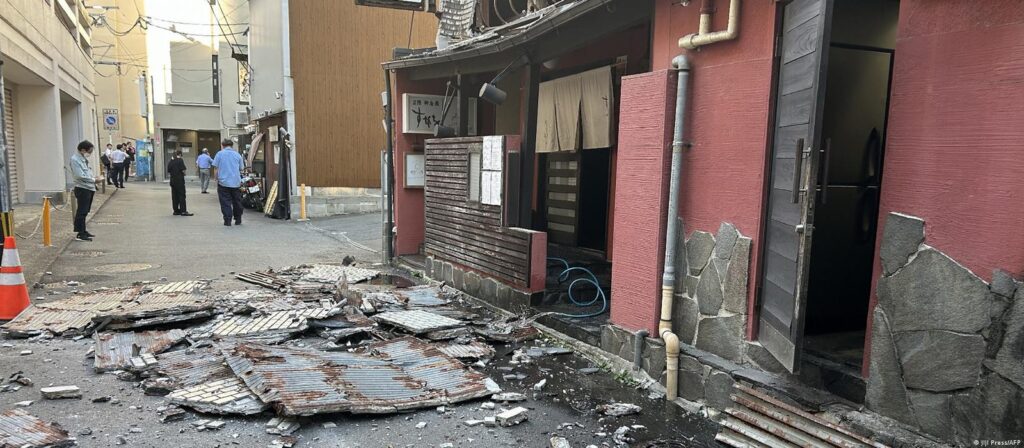
Magnitude and Epicenter
The Japan Meteorological Agency recorded the quake at a preliminary magnitude of 7.1, while the U.S. Geological Survey later revised it to 6.8. It struck at 4:27 p.m. local time, with its epicenter about 20 kilometers south of Kumamoto city at a depth of roughly 10 kilometers, on Japan’s southern main island of Kyushu.
Tsunami Warning Issued and Later Lifted
The Japan Meteorological Agency issued a tsunami advisory of up to 3 feet for the coasts of the Ariake Sea and Yatsushiro Sea, prompting evacuation orders for roughly 300,000 residents in Kumamoto prefecture. The advisory was withdrawn a few hours later, though officials warned that further aftershocks remain possible in the coming days.
Shopping Mall Collapse and Explosion
One of the most serious incidents occurred at an Aeon Mall in Kashima City, where an explosion — believed to have been caused by a gas leak — led to a partial collapse of the building’s walls and roof. Local broadcaster NHK reported that customers and staff had been evacuated before the blast, though police said there were a significant number of deaths at the site, with the exact toll still being confirmed.
Deaths and Casualties
Japanese Prime Minister Sanae Takaichi confirmed that 13 people have been found dead so far, with rescue work continuing for others who remain missing. Separately, at least 11 people were reported trapped inside the Nippon Paper Industries plant in Kumamoto after a chimney collapsed during the quake; two were later found without vital signs. Hundreds of people have been injured and are receiving hospital treatment, though some hospitals have had to suspend operations due to power outages.
Infrastructure and Power Impact
Around 45,000 households and facilities in the Kumamoto region lost power following the quake, according to local utility Kyushu Electric Power. The company confirmed that three nuclear reactors operating in the region at the time continued functioning normally, and Japan’s Nuclear Regulation Authority reported no abnormalities at nuclear power plants in the area.
What Happens Next?
Rescue and relief operations remain underway across the affected region, with authorities continuing to assess the full extent of the damage. The Japan Meteorological Agency has warned that additional earthquakes could occur in the coming days given the shallow depth of the initial quake. This is a developing story, and figures related to casualties and damage may be updated as more information becomes available.
Note: This report is based on information available from Japanese authorities and international news agencies at the time of publication. Casualty figures may change as rescue operations continue.