

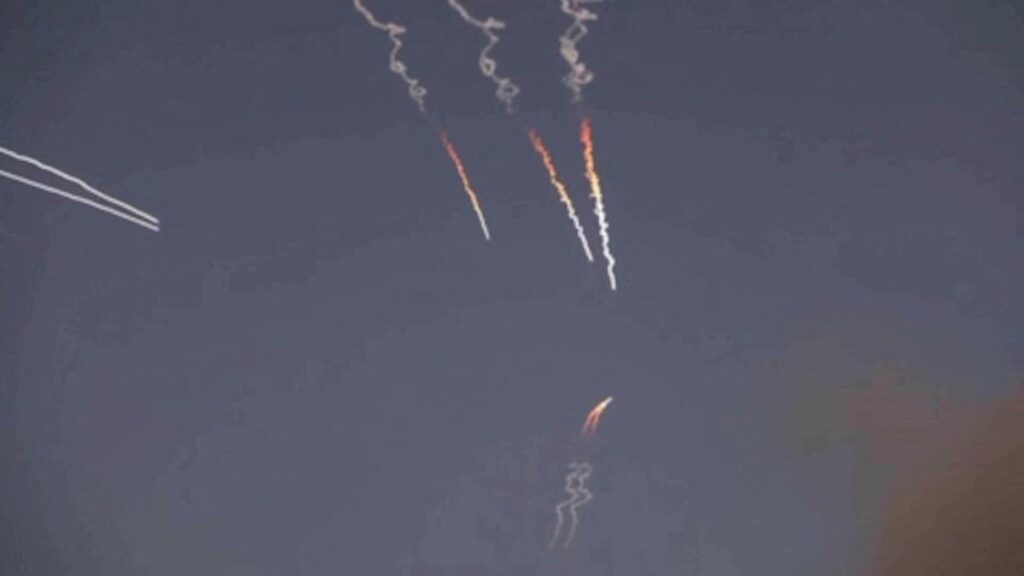
Jordans military said on Monday that its air defence systems intercepted and destroyed four missiles that entered the countrys airspace at dawn. This happened as Tehran launched a wave of strikes across multiple Gulf states in response to intensified American attacks on Iranian territory over the weekend.
Details of the Interception
The military confirmed that air defence systems detected and shot down the four missiles. They came from territory in the early hours of Monday morning. Luckily there were no reports of injuries or damage to property. This means the interception was carried out successfully before the missiles could reach any sensitive areas.
Iran said the missile launches were retaliation for the round of American strikes on its territory. These strikes targeted about 140 sites across the country overnight. They included missile and drone launch facilities, ammunition depots and installations linked to Irans Revolutionary Guard.
Part of a Wider Regional Barrage
Jordan was not the country affected by Irans response. Iran launched a series of missile and drone attacks on Sunday. These targeted American military facilities across nations hosting U.S. Forces. The countries include Qatar, Bahrain, Kuwait, Oman and the United Arab Emirates in addition to Jordan. This marks an escalation in an already tense regional standoff.
Missile alert sirens sounded across the Gulf region as the attacks happened. Bahrain, home to the U.S. Navys Fifth Fleet activated its missile alert sirens twice during the morning. Kuwaits military confirmed its air defence systems were engaging threats as Iran retaliated against U.S. Airstrikes.
Arab League Condemns the Attacks
The Arab League strongly condemned the regional strikes. The organisations Secretary-General reaffirmed solidarity with the affected nations. These nations include Kuwait, Bahrain, Qatar, the United Arab Emirates, Oman and Jordan. The Secretary-General called on the United Nations Security Council to take steps to halt what he described as ongoing violations. He also urged respect for law and the security of international navigation in the region.
Context: A Broader Pattern of Strikes on Jordan
Mondays interception adds to a recurring pattern of Iranian missile and drone activity affecting Jordanian airspace. This has been happening since the outbreak of the Iran conflict on February 28 2026. Jordan has repeatedly found itself caught within the flight paths of projectiles. These projectiles are aimed at American and allied installations in the region.
The Broader Standoff Driving the Latest Escalation
The current wave of strikes stems from an escalating standoff centred on the Strait of Hormuz. An Iranian attack on a container ship transiting the waterway over the weekend set the vessel ablaze and left a crew member missing. The United States responded with intensifying strikes on territory. This prompted Irans retaliatory attacks across the Gulf region including the missiles intercepted by Jordan on Monday.
Why Jordan’s Position Matters
Jordans location places it directly within the flight corridors used for Iranian strikes. These strikes target military installations elsewhere in the region. This makes Jordan a recurring participant in the conflicts missile exchanges. Jordan hosts military assets and maintains close security cooperation with Washington. These factors have contributed to its repeated involvement in intercepting projectiles.
### What Happens Next
With Iran having launched attacks across at six countries in the region within a single 24-hour period attention will turn to whether the current round of escalation prompts renewed diplomatic efforts. Will there be efforts to prevent attacks or will the exchange of strikes continue to intensify in the days ahead? The situation across the Gulf region remains highly fluid. Is likely to be closely monitored by governments and international organisations, in the coming days.