

Iran/US | ENewsxpress Desk:
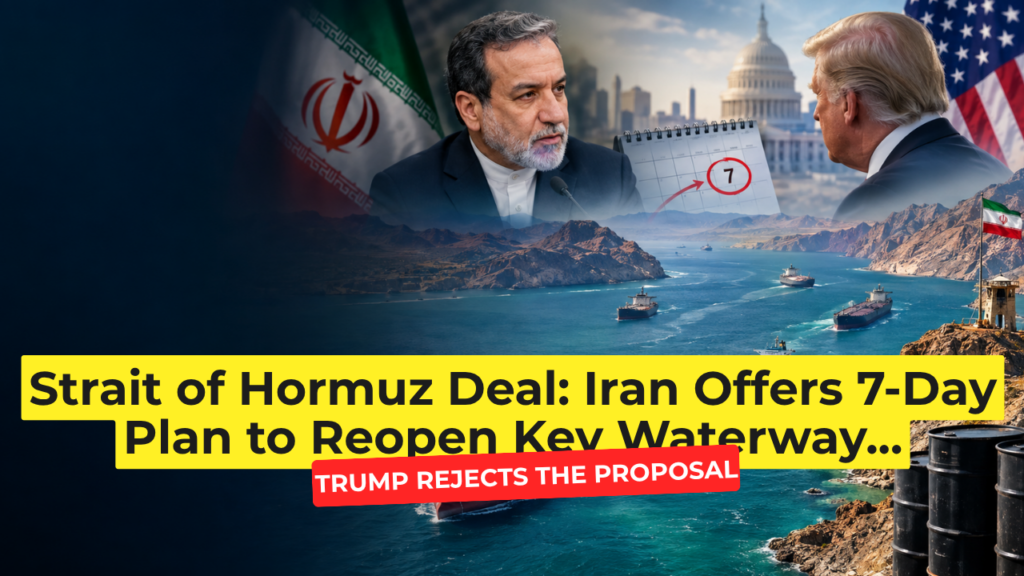
Strait of Hormuz has once again become the center of global attention after Iran proposed a fresh plan to reopen the strategic waterway within seven days — but only if the United States agrees to a specific set of conditions. The offer, detailed by Iranian Foreign Minister Abbas Araghchi on the sidelines of the UN General Assembly in New York, could mark a major turning point in the standoff that has disrupted nearly a fifth of the world’s oil and gas trade.
What Iran Is Offering Over the Strait of Hormuz
According to reports, Tehran’s proposal requires the United States to take three key steps before the strait reopens:
- Lift the naval blockade currently imposed on Iranian ports
- Waive sanctions on Iranian oil exports
- Observe a ceasefire that extends to Lebanon
Araghchi explained that once Washington accepts these terms, the clock would start ticking immediately. Initial steps would take around four to five days, with the Strait of Hormuz reopening by day six. “On day seven, the talks with the U.S. will begin for the final deal on mutually agreed subjects,” he said, referring to renewed negotiations over Iran’s nuclear program.
Why the Strait of Hormuz Matters So Much
The Strait of Hormuz is one of the most strategically important waterways on the planet. Before the current conflict, roughly 20% of global oil and gas shipments passed through it daily. Iran’s ability to disrupt traffic through the strait has become its strongest bargaining chip in negotiations with Washington — and its effects have rippled far beyond the Middle East, pushing up energy prices and fueling inflation concerns worldwide.
The White House has responded cautiously, saying only that U.S. officials are engaged in “positive and constructive” conversations with mediators, while noting that the U.S. is already facilitating some oil exports through the strait.
A Familiar Blueprint for the Strait of Hormuz, With a Faster Timeline
This isn’t Iran’s first attempt at a deal over the Strait of Hormuz. The new proposal closely mirrors a Memorandum of Understanding reached back in June, which had set a 60-day interim period. That earlier agreement collapsed quickly after Iran resumed attacks on shipping in the strait. This time, the accelerated seven-day timetable suggests both sides may be under greater pressure to reach a resolution.
Read More: US Launches More Strikes on Iran as Strait of Hormuz Standoff Escalates
Political Pressure Shaping the Strait of Hormuz Negotiations
Sources close to the talks suggest Iran is eyeing the U.S. midterm elections in November as a motivating factor — a quick deal could offer political benefits to the Trump administration amid high gas prices. Meanwhile, Iranian President Masoud Pezeshkian has said Tehran wants an agreement finalized before the midterms as well, rather than let negotiations drag on.
However, questions remain on the Iranian side about whether hardliners within the security establishment will accept compromises championed by moderates like Pezeshkian.
Regional Players Watching the Strait of Hormuz Talks Closely
Gulf Arab states, including Saudi Arabia, have been closely involved in the background diplomacy. Qatar has played a key mediating role, hosting indirect talks between Iranian and U.S. officials this week. Saudi Arabia had earlier pushed for amendments to a proposed framework involving Oman and Iran, complicating efforts to finalize a regional agreement.
What Happens Next:
For now, there’s no confirmation from Washington on whether it will accept Iran’s terms. Analysts say the coming days will be critical for the Strait of Hormuz standoff — if the U.S. responds positively, global oil markets could see relief from ongoing supply disruptions. If not, the crisis over one of the world’s most vital shipping routes is likely to continue.
Frequently Asked Questions:
Q1. Why is the Strait of Hormuz so important to global oil supply?
The Strait of Hormuz is one of the world’s busiest and most critical oil shipping routes, with roughly a fifth of global oil and gas trade passing through it before the ongoing conflict. Any disruption there directly affects global energy prices and supply chains.
Q2. What conditions has Iran set to reopen the Strait of Hormuz?
Iran has said it will reopen the Strait of Hormuz within seven days if the U.S. lifts its naval blockade on Iranian ports, waives sanctions on Iranian oil exports, and observes a ceasefire that extends to Lebanon.
Q3. Has a similar Strait of Hormuz deal been proposed before?
Yes. The current proposal closely resembles a Memorandum of Understanding reached in June, which set a 60-day interim period. That earlier deal collapsed quickly after Iran resumed attacks on shipping in the strait, making this seven-day plan a faster, more urgent version of that same framework.
Q4. How has the Strait of Hormuz crisis affected global oil prices?
Disruptions to shipping through the Strait of Hormuz have pushed oil prices higher worldwide, adding to inflation pressures well beyond the Middle East. A successful reopening could ease some of that pressure on global energy markets.
Note:
Stay tuned for continuing coverage of the Strait of Hormuz negotiations and Iran-U.S. diplomacy. With mediators like Qatar actively shuttling messages between Tehran and Washington, and Gulf states watching closely from the sidelines.
Source :
Enewsxpress official responses out of Washington to on-ground developments in the Gulf