

The Supreme Court has agreed to list all pending petitions that challenge the Madhya Pradesh High Court’s verdict on the disputed Bhojshala-Kamal Maula complex in Dhar. This decision brings together legal challenges from both Hindu and Muslim parties. The dispute over the site’s character has been ongoing for a long time and is now moving to the national stage.
Background: The High Court’s May 15 Verdict
The case started with a ruling by the Madhya Pradesh High Court on May 15. The court said that the disputed Bhojshala complex is a Hindu temple. The High Court decided that the disputed area, a protected monument under the Archaeological Survey of India (ASI) should be recognised as Bhojshala. This area is said to house a temple dedicated to Goddess Saraswati.
The verdict came after the High Court examined petitions relating to the site. The Hindu petitioners wanted to reclaim the address restrictions on Hindu worship. The High Court also quashed an ASI notification. This notification had permitted Muslims to offer namaz at the complex every Friday.
The High Court’s Decision
The High Courts decision was based on a 2024 ASI survey report. The report found that the existing structure at the site appeared to have been constructed using components from temples. The court concluded that the structure was historically associated with King Bhoj of the Parmar dynasty.
Multiple Petitions Challenging the Verdict
After the High Court’s ruling, multiple parties moved the Supreme Court to challenge aspects of the decision. Qazi Moinuddin, associated with the mosque side, filed a Special Leave Petition. He challenged the High Court’s findings on restrictions affecting Friday namaz and the court’s conclusions on the complex’s religious character. Parties from the Hindu side also sought to ensure their position is heard. A caveat was filed in the Supreme Court by Jitendra Singh “Vishen,” one of the petitioners.
What the Site Means to Communities
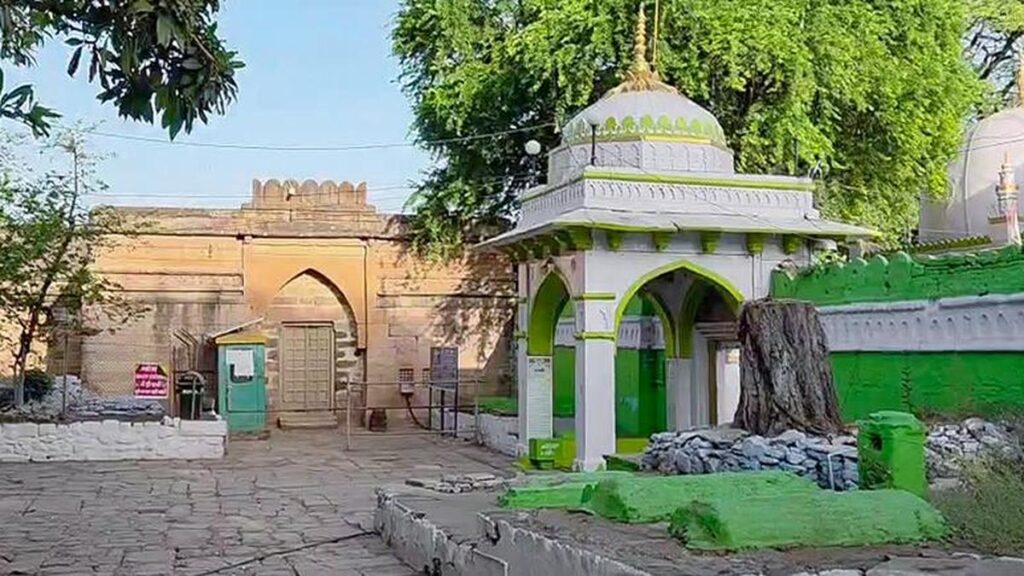
The Bhojshala-Kamal Maula complex is an 11th-century monument in Dhar district. The Hindu community considers the site an ancient temple dedicated to Goddess Saraswati. The Muslim community regards the structure as the historic Kamal Maula Mosque.
A History of Interim Arrangements
There has been a dispute over the site for some time. The ASI issued an arrangement in 2003. This allowed Hindus to worship at the site every Tuesday and Muslims to offer namaz every Friday.
Why Joint Listing Matters
The Supreme Courts decision to list all pending petitions together is significant. This approach ensures that all perspectives are considered together. It is commonly adopted in multi-party disputes.
Broader Significance
The Bhojshala case is being closely watched. It is part of a pattern of legal disputes across India involving religious sites with contested histories. The Supreme Court’s handling of the Bhojshala matter will likely be viewed as significant.
What Happens Next
With all petitions now set to be listed, both the Hindu and Muslim parties will present their arguments before the Supreme Court. The case is likely to require detailed judicial consideration before any final resolution is reached.