

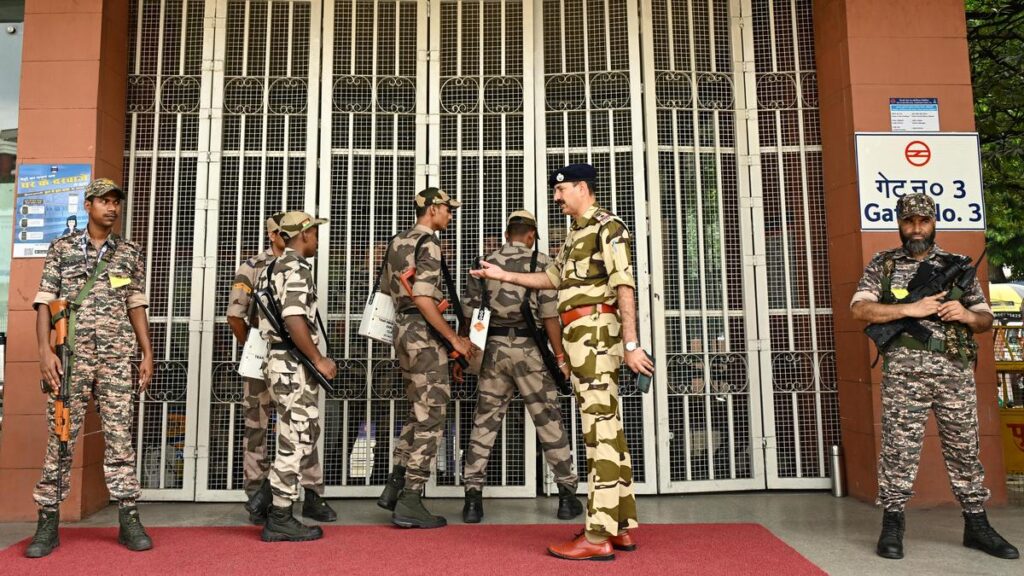
Sixteen Delhi Metro stations across the central part of the national capital were shut on Thursday morning until further instructions, the Delhi Metro Rail Corporation (DMRC) confirmed, as crowds continued to swell at the ongoing Cockroach Janta Party (CJP) protest at Jantar Mantar.
Which Stations Were Closed
According to the DMRC, the affected stations included Lok Kalyan Marg, Rajiv Chowk, Patel Chowk, Ramakrishna Ashram Marg, Barakhamba Road, Supreme Court, Seva Teerth, Janpath, Mandi House, Central Secretariat, ITO, Delhi Gate, Indraprastha, Khan Market, Jor Bagh, and Shivaji Stadium. The closures took effect from 7:30 am and were described by the corporation as remaining in place until further instructions.
Despite the scale of the shutdown, the DMRC clarified that interchange facilities would continue to remain available at three key stations, Rajiv Chowk, Mandi House, and Central Secretariat, allowing commuters travelling between different metro lines to still switch routes at these locations even though general entry and exit were suspended.
The Stated Reason
The DMRC attributed the closures to security reasons, a standard classification used by the corporation when metro station operations are restricted in response to advisories from Delhi Police during large public gatherings, protests, or other law-and-order-sensitive situations in the vicinity of affected stations.
Context: A Swelling Protest at Jantar Mantar
The station closures came as the crowd at the CJP’s ongoing protest at Jantar Mantar continued to grow through Thursday morning. The demonstration, organised by the Gen Z-led Cockroach Janta Party, has centred on demands relating to alleged irregularities in the NEET-UG examination and other public tests, with protesters calling for the resignation of Union Education Minister Dharmendra Pradhan and greater accountability over an alleged examination paper leak.
The protest has continued for an extended period at the historic Jantar Mantar site, and gained further momentum earlier in the week following a large “Parliament Chalo” march in which thousands of protesters attempted to march toward Parliament. That march was met with police action, including reported use of lathi-charge, pellet guns, and shock batons, according to opposition accounts, resulting in injuries to several demonstrators, some of whom remained at the protest site in its aftermath.
Political Reaction Amid the Closures
The metro station closures drew sharp criticism from opposition leaders, with Congress president Mallikarjun Kharge directly challenging Prime Minister Narendra Modi over the government’s handling of the situation. Responding to Modi’s earlier remarks affirming that those who play with the future of the country’s youth would not be spared, Kharge argued that all avenues for the country’s young people had effectively been shut, questioning where they were now expected to turn.
Kharge further alleged that India’s education system had deteriorated significantly, and stated that the government’s response to the protests, including what he characterised as lathi-charges, pellet guns, shock batons, and indiscriminate use of force against young protesters, reflected a troubling disregard for the country’s youth, describing the affected demonstrators as India’s own children.
On social media, several commuters and observers also criticised the scale of the closures, with some suggesting that shutting down large portions of the city’s metro network reflected an outsized response to a peaceful protest movement, while others linked the closures directly to the government’s continued unwillingness to accept the CJP’s core demand regarding the Education Minister’s resignation.
A Recurring Pattern During Major Protests
Thursday’s closures are consistent with a long-established pattern in which the DMRC, acting on Delhi Police advisories, has periodically restricted access to metro stations located near major protest sites in the national capital during periods of heightened public assembly. Similar closures have accompanied previous large-scale demonstrations in Delhi over the years, including protests linked to the Citizenship Amendment Act in 2019 and farmers’ protests at the city’s borders, reflecting standard security protocol during events expected to draw significant crowds to sensitive central Delhi locations.
Impact on Commuters
With 16 stations affected, spanning key interchange points and commercial and government hubs across central Delhi, the closures were expected to cause significant disruption for regular commuters attempting to access areas including Connaught Place, Central Secretariat, Khan Market, and other major destinations served by the affected stations. Commuters travelling through the region were advised to plan for alternate routes or delays, given the scale of the network affected by Thursday’s restrictions.
What Happens Next
With the closures described by the DMRC as remaining in effect until further instructions, the exact timeline for restoring normal services at the affected stations will likely depend on how the situation at Jantar Mantar develops throughout the day. Given the continuing scale of the CJP protest and the broader political tensions surrounding the government’s response to the students’ demands, further updates regarding both the metro closures and the underlying protest situation are expected as the day progresses.