

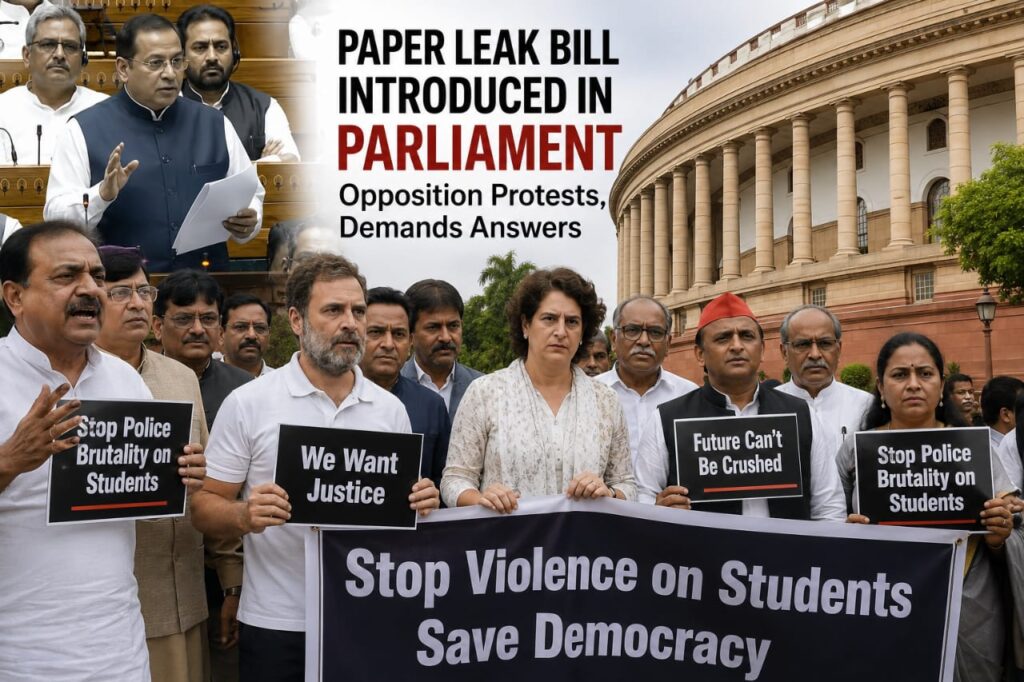
New Delhi: During the Monsoon Session of Parliament, the Central Government on Monday introduced the Public Examinations (Prevention of Unfair Means) Amendment Bill, 2026 in the Lok Sabha. According to the government, the proposed legislation aims to curb paper leaks and examination-related scams across the country. The Opposition strongly protested the move and questioned the government over alleged police action against students.
What Is the Purpose of the Bill?
The amendment bill, introduced by Union Minister Dr. Jitendra Singh, seeks to make the existing anti-paper leak law more stringent. It proposes tougher punishments for paper leaks and organized examination fraud, along with faster investigations and expedited judicial proceedings. The government says these measures will strengthen the credibility, transparency, and fairness of public examinations.
Digvijaya Singh Questions the Move
In the Rajya Sabha, senior Congress leader Digvijaya Singh criticized the government’s approach, saying that merely enacting stricter laws would not resolve the ongoing examination crisis. He argued that the examination system itself requires structural reforms and called for a serious discussion on the National Education Policy (NEP) 2020.
Opposition Stages Protest
Following the introduction of the bill, Opposition MPs staged a protest within the Parliament premises. Congress leaders Rahul Gandhi and Priyanka Gandhi Vadra, along with several other opposition members, demanded answers from the government regarding alleged police action against protesting students. The Opposition alleged that students’ voices were being suppressed.
Government’s Stand
Prime Minister Narendra Modi had earlier announced that the government would bring stricter legislation to tackle paper leaks. According to the government, the new amendment will ensure stronger action against those involved in examination fraud and help prevent such incidents in the future.
What Happens Next?
The bill will now go through the remaining stages of the parliamentary legislative process. If it is passed by both Houses of Parliament and receives the President’s assent, it will become law across India. The issue of paper leaks and student protests has emerged as one of the key topics of debate during the ongoing Monsoon Session of Parliament.