

Five women who had C-Section deliveries at the Government Mother and Child Hospital in Banswada, Kamareddy district, Telangana are now very sick. The state government is looking into what happened. They have stopped all C-Section deliveries at the hospital for now.
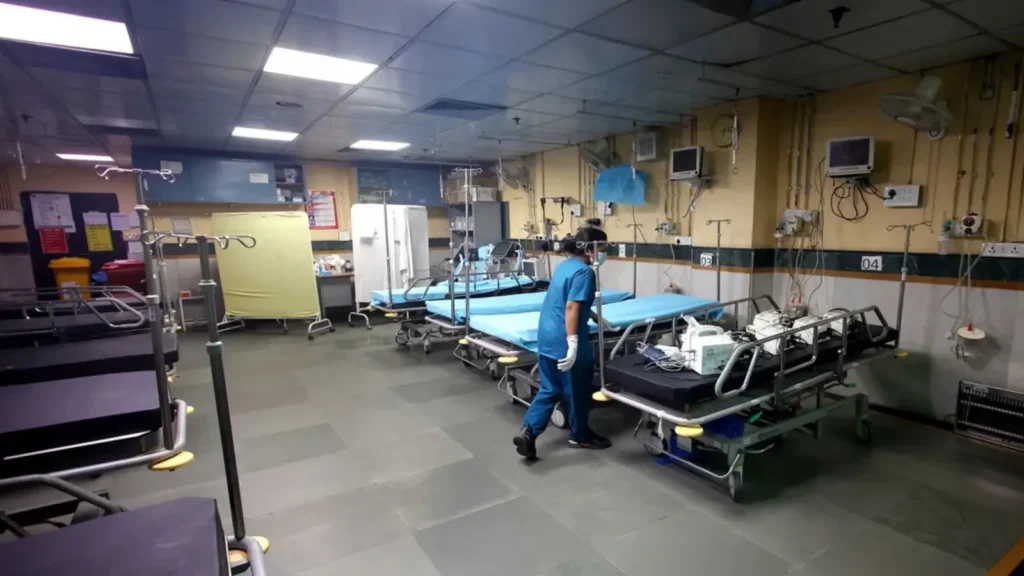
What Happened
Ten women had C-Section deliveries at the hospital on July 10 and 11. Five of them got very sick with kidney problems and other issues. The first woman started showing signs of being sick on July 10. She was sent to the Government General Hospital in Nizamabad. Four women were sent to the same hospital over the next two days. Three of the five women were sent to the Nizams Institute of Medical Sciences in Hyderabad. Two of them are now in condition but one is still very sick. The other two women are being treated at the Government General Hospital in Nizamabad. Are in stable condition.
The first patient began showing signs of complications around midnight on July 10 and was referred to the Government General Hospital in Nizamabad. Over the following two days, four more women were similarly shifted after developing low urine output and related symptoms. Given the severity of their conditions, three of the five women were subsequently referred for advanced care to the Nizam’s Institute of Medical Sciences (NIMS) in Hyderabad, with all three initially admitted to the hospital’s Intensive Care Unit. According to the latest available updates, two of the three women shifted to NIMS were reported to be in stable condition, while one remained critical. The remaining two women continued treatment at Government General Hospital, Nizamabad, and were reported to be stable.
Hospital’s Response
Dr M. Vijay Bhaskar, superintendent of the Mother and Child Hospital, addressed the situation publicly, seeking to dismiss rumours regarding poor standards of care at the facility. He noted that the hospital handles approximately 350 deliveries each month and had recently received recognition during the state health department’s “99 Programme” celebrations, pointing to this as evidence of the facility’s generally strong track record. According to hospital authorities, swab samples collected from the operation theatre tested negative for contamination, and the intravenous fluids administered to the affected patients were confirmed to be sterile, findings that have so far ruled out some of the more obvious potential causes behind the complications. Since the patients had already been transferred to NIMS for treatment before the scale of the situation became fully apparent, the matter reportedly came to wider public attention only some time after the initial complications began.
The State Government’s Inquiry
Taking serious note of the incident, the Telangana Health Department ordered a formal inquiry, with a team of senior health officials inspecting the hospital on July 14. The inquiry committee has since intensified its investigation, with members including Narender Reddy, executive engineer of the Telangana Medical Services and Infrastructure Development Corporation (TGMSIDC), inspecting key areas of the facility, including the operation theatre, the water supply tank, the labour room, and the overall structural quality of the hospital building. As part of the investigation, laboratory analysis of medicines and surgical materials used during the procedures is currently underway, aimed at determining whether any contaminated or substandard medical supplies may have contributed to the complications experienced by the affected women. Pending the outcome of this investigation, hospital authorities have suspended all Caesarean section procedures at the facility until the underlying cause of the complications has been conclusively established.
People are Paying Attention
Many people are talking about what happened. A former minister, T. Harish Rao went to the hospital to meet with the families of the women. This shows that people are concerned about what happened.
C-Section Deliveries in Telangana
Telangana has a number of C-Section deliveries. 60.7 Percent of all deliveries in Telangana are C-Sections. This is one of the rates, in the country. Researchers think that this is because there are not trained people to do normal deliveries. Many C-Section deliveries are not necessary.
Why This Matters
What happened in Banswada is important because it shows that we need to make sure that hospitals are safe for women to have babies. The investigation will help us understand what happened and how to prevent it in the future.
What Happens Next
With laboratory testing of medicines and surgical materials still underway and the state inquiry committee continuing its on-ground assessment of the hospital’s facilities, further clarity on the precise cause of the complications is expected in the coming days. Given the suspension of C-section procedures at the facility pending the investigation’s outcome, and the continued treatment of the affected women, particularly the one patient still reported to be in critical condition, health officials are likely to face continued scrutiny over both the immediate medical response and any longer-term systemic issues the inquiry uncovers.